2026-07-16 · Abhijeet Kakade
The Hardest Lesson I Learned: Nobody Owes Your Product Their Time
I thought building more features made a better product. One project proved me wrong.

I used to think more features meant a better product.
I was wrong.
For a long time, building software felt like a technical challenge.
If I could make the UI cleaner, add more features, improve the architecture, and keep polishing it every day, I believed people would naturally want to use it.
That sounds obvious now.
Back then, it didn't....
I kept building...
One day I decided to participate in Avalanche Build Games.
I started building Avaxverse.
At first it was just another hackathon project.
Then it slowly became something much bigger.
Every day I found something to improve.
- Better UI
- Better animations
- More features
- Better architecture
- More Web3 integrations
Every improvement made me feel productive.
And honestly...
I loved it.
The project kept getting better.
It even reached Stage 2 of Build Games.
A YC founder friend looked at it and told me,
"This UI is really good. It doesn't even feel vibe coded."
That made me incredibly proud.
For a while I genuinely believed I was building something amazing....
Then one question ruined everything.
One day I stopped looking at the code.
Instead I asked myself...
Who is actually going to use this?
I couldn't answer.
That silence hurt more than any bug....
Because I realized something.
I had spent weeks making the product better...
without knowing who actually needed it.
I wasn't building for users.
I was building for judges.
I even presented it at Avalanche Team1 City Connect Nashik.
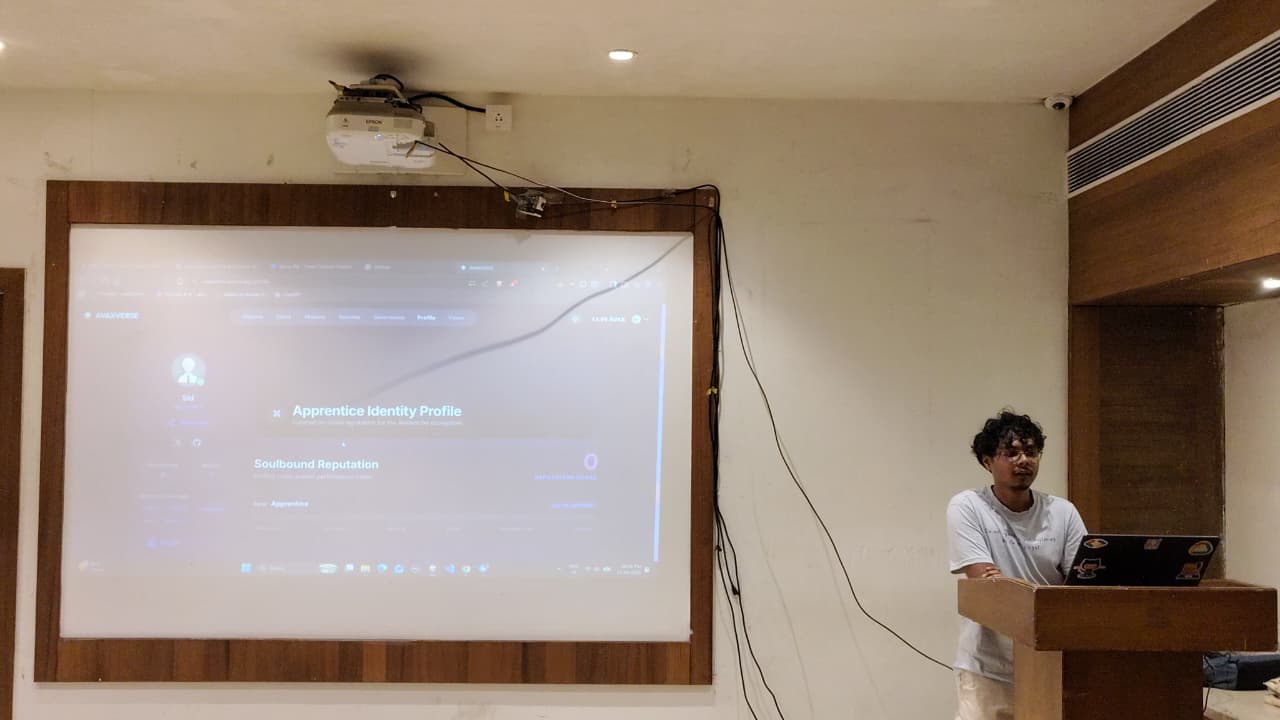
People appreciated the project.
People appreciated the UI.
People appreciated the effort.
But appreciation isn't usage.
Nobody woke up thinking,
"I need Avaxverse today."
That was the moment everything changed.
The next project wasn't another hackathon.
After Avaxverse, I made myself a promise.
I wouldn't start another project just because I thought it sounded cool.
I wanted to solve a real problem.
So before opening my code editor, I asked myself one simple question.
What problem do I personally have?
That question completely changed the way I build.
Instead of looking for ideas online, I started paying attention to the small frustrations in my own life.
It turns out those frustrations are often shared by other people too.
That became the foundation for my next project.
The project itself isn't the important part of this story.
The mindset behind it is.
For the first time, I wasn't trying to impress judges.
I wasn't trying to build the biggest app.
I wasn't trying to create the longest feature list.
I was simply trying to solve one problem well.
That single change made every decision easier.
Features stopped being trophies.
They had to earn their place.
If a feature didn't help solve the original problem, it didn't get built.
The architecture became simpler.
The scope became smaller.
The product shipped much faster.
More importantly...
People actually wanted to use it.
That felt completely different from shipping something technically impressive.
Because this time, the excitement didn't come from building.
It came from seeing that something I made was genuinely useful to someone else.
That changed how I think.
Looking back, the biggest change wasn't in my coding skills.
It was in the questions I asked before writing a single line of code.
Before, my first thought was,
What else can I build?
Now it's,
Why should someone care?
That one question filters almost every idea I have.
It reminds me that users don't reward effort.
They reward usefulness.
The opportunities that came afterwards, interviews, founder conversations, hackathons, all happened because I finally had a product with a clear story behind it.
Not because it had the most features.
Because it solved a real problem.
Nobody owes your product their time.
This is probably the hardest lesson I've learned so far.
People don't care how beautiful your architecture is.
They don't care how many weekends you worked.
They don't care how polished your animations are.
They only care if your product makes their life a little easier.
That's it.
Once I accepted that, building became much simpler.
Now I spend less time asking,
"What feature should I add next?"
and more time asking,
"Should this feature exist at all?"
The lesson I want to remember
Avaxverse taught me how to build software.
My next project taught me why people use software.
I wouldn't remove either from my journey.
Without the first one, I would never have understood the second.
Shipping something useful will always matter more than perfecting something nobody needs.
Even if one day every product I build fails....
I'll still call myself a founder.
Because being a founder was never about having one successful product.
It was about choosing to build again.